Patient safety first
Every recommendation starts with clinical risk, intended use, cleaning process, and staff readiness. We avoid vague promises and focus on the conditions that make safe operation repeatable.

Our story is shaped by hospitals that need respiratory care decisions explained clearly, biomed departments that need evidence ready for audits, and home-health programs that need training materials families can actually follow.
The founding engineering group formalized design controls for respiratory and monitoring accessories, creating a habit of linking product decisions to documented intended use.
Hamilton Medical adopted the discipline that later aligned with ISO 13485, including supplier qualification, complaint review, and traceable production records.
Clinical support expanded beyond replacement parts into staff education, preventive maintenance planning, and field escalation for high-dependency care settings.
Technical files, labeling routines, and market-specific evidence packets were harmonized for FDA, CE, and distributor review needs.
Service teams began tracking time-to-first-response, knowledge-base usage, and training completion so hospitals could see support performance in operational terms.
Remote support workflows added SBOM review, CVE triage expectations, access control notes, and documentation for connected monitoring conversations.
Every recommendation starts with clinical risk, intended use, cleaning process, and staff readiness. We avoid vague promises and focus on the conditions that make safe operation repeatable.
Product and service discussions reference IFU requirements, IEC 60601-1 expectations, alarm policies, and documented device records instead of generic sales language.
A medical device remains part of a facility long after purchase. Our advisors keep training, parts, firmware, consumables, and recall readiness in the same conversation.



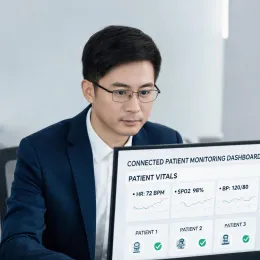
Hamilton Medical works best when the facility brings clinical users, biomed, IT security, infection prevention, and supply chain into the same planning process. That cross-functional habit is why our recommendations often look more practical than flashy: they are built to survive the everyday realities of staffing, documentation, budget timing, and service escalation.
Bring the questions your value analysis, respiratory therapy, biomed, and IT security teams are already asking.
Schedule a Conversation