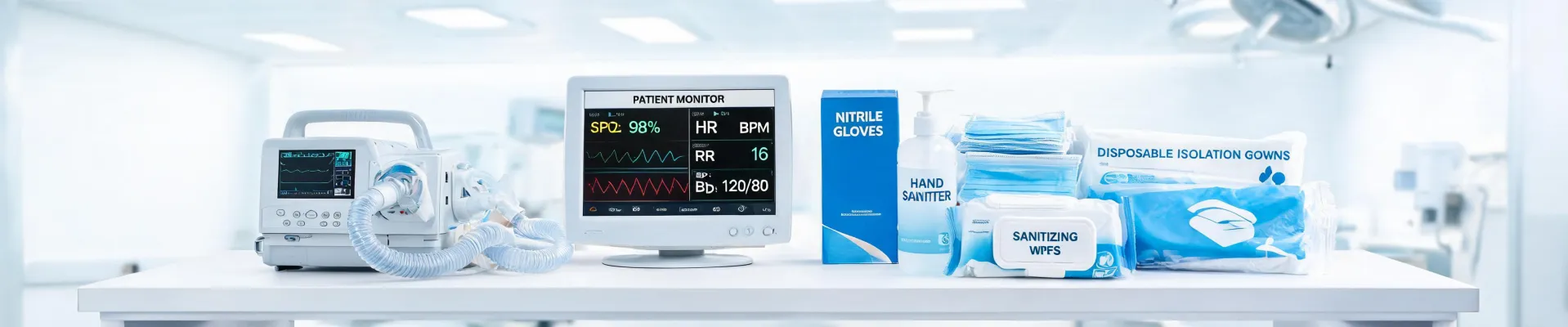
I work at Hamilton Medical, where I check every device before it reaches a customer. That's roughly 200 items a year—walkers, rehabilitation equipment, centrifuge machines, you name it. In 2024, I rejected about 12% of first deliveries because the specs didn't match the order. So when I tell you how to choose equipment, I'm not reading from a brochure.
The biggest mistake I see isn't picking the wrong brand. It's skipping the rent vs. buy decision. People jump straight to model names, colors, and features. That's backwards. The ownership model changes everything after it. So let's compare renting versus buying the way I'd compare it for a hospital, a clinic, or a local practice.
I went back and forth on this one myself. For our own facility, the rental option looked better on paper—no big capital outlay, no maintenance worry. But my gut said we'd lose too much control. That tension is the whole point of this guide.
Rent vs. Buy: The Framework
Renting means temporary use. Buying means it's yours. Both can be smart, but they work in different situations.
Why does this matter? Because the real cost of equipment is not the sticker price. It's how long you use it, how often it breaks, and how much time your team spends managing it.
1. Money Over Time
Renting looks cheaper because the number is small. But I mean total cost, not monthly cost. What I mean is the monthly fee plus delivery, pickup, consumables, insurance, and the time your staff spends on paperwork.
A basic walker is a good example. Monthly rental fees add up fast. I've seen a one-year rental total more than three times the purchase price of the same model. If you need it for more than a few months, buying wins. For a large rehab bed or a centrifuge machine, the gap is different, but the logic holds: the longer you use it, the more likely buying wins.
Here's the part people skip: billing. If you're going through a hospital, ask the billing office before you sign anything. At one nearby hospital, the Hamilton Medical Center billing team handles durable medical equipment like walkers differently than routine supplies. A rental may need a different authorization than a purchase. Get that wrong, and the rental isn't convenient anymore—it's a headache.
A Hamilton NJ medical spa that does PRP treatments might use a small centrifuge a few times a week. For that, renting can make sense while you're testing demand. But once the schedule becomes predictable, buy. The monthly rental fee adds up way more than the purchase price suggests.
Never expected the "cheap" rental to cost us more in the end. Turns out the after-hours delivery fee and per-use consumables added up to more than the monthly rate. I should have asked for a full breakdown upfront. Looking back, I would have.
2. Maintenance and Support
The rental company owns the maintenance problem. That's the strongest argument for renting. If a rented centrifuge machine fails, you call them, and they send a replacement. The headache is theirs.
But only if their response time is real. I've seen rental contracts where broken equipment sat for a week because the support team was short-staffed. That's a ton of missed appointments. The question isn't whether they promise support. It's how fast they're contractually required to respond, and what happens if they can't.
When you buy, you own the maintenance. For a basic walker, that's nearly a non-issue. For a centrifuge machine, a service contract can add cost. But if the machine runs daily, buying with a service contract is often still less than renting month after month.
I have mixed feelings about rental service contracts. On one hand, they feel like recurring fees. On the other, I've seen what happens when a broken device isn't fixed quickly. If you rent, ask for the service-level agreement in writing. If the company won't put a response-time guarantee in the contract, assume the worst.
3. Does It Fit the User?
This is where "how to choose a walker" actually starts. A walker is rehabilitation equipment, but not all walkers are the same.
- Standard walker (no wheels): more stable, better for someone who needs to bear weight through the frame. It forces a slow, controlled step.
- Rollator (wheels and brakes): better for someone who has okay balance but needs support and a place to sit when tired.
The surprising part? A standard walker is often more durable and easier to adjust than a fancy rollator. The rollator has more moving parts—wheels, brakes, cables. I've rejected rollators because the brake tension was inconsistent. The standard frame? It barely changes.
So when someone asks me "how to choose a walker," I ask: who's using it, and on what surface? Inside on flat floors with fatigue? Rollator. Uneven ground or need maximum support? Standard walker. Short recovery at home? Rent. Long-term mobility issue? Buy.
That same logic applies to other rehabilitation equipment. A clinic with daily patients needs to buy. A home user with a six-week recovery might be better renting—if a reliable local supplier exists.
Rent or Buy? The Bottom Line
Here's my practical rule:
- Rent if you need equipment for a limited time, you don't have the capital, or you're still testing whether you need it at all.
- Buy if the equipment will be used regularly for more than a year, the item is simple and durable, or you want full control over specs and quality.
There is no universal winner. But I've seen way more people pay too much by renting for a long time, or buy something they used for a month and then stored. Both are avoidable.
For a medical spa in Hamilton NJ, a hospital, or a home caregiver, the questions are the same. How often will this run? Who fixes it when it fails? And what does the billing office say?
A Quick Word on Claims
Whichever route you choose, get the claims in writing. This matters more than you think. Per FTC guidelines (ftc.gov), advertising claims must be truthful and backed by evidence. So if a rental company says their walker supports 300 pounds, ask for the spec sheet. If a supplier says a centrifuge machine hits a certain RPM, ask for the test record.
Truthful claims require substantiation. That's not a nice-to-have. It's the standard.
I've rejected a delivery of centrifuge machines because the calibrated speed didn't match the spec sheet. The vendor tried to call it close enough. It wasn't. If I hadn't checked, that equipment would have gone out to customers who trusted the numbers.
Take it from someone who does this for a living: rent or buy is the first decision, but verifying the specs is the one that keeps you safe.

Elena Varga
Elena Varga is a medical imaging systems analyst covering CT scanners, MRI systems, ultrasound platforms, digital radiography, mammography, and ophthalmic imaging equipment. She references IEC 60601-2-44 for CT safety and essential performance while examining CTDIvol, dose-length product, spatial resolution, slice thickness, field uniformity, throughput, uptime, and DICOM interoperability. Her work helps radiology leaders, medical physicists, biomedical engineers, and procurement teams compare image quality, radiation management, workflow integration, serviceability, and lifecycle cost.