The Core Question: Real-Time Data or Precision Intervention?
I've spent most of my career as a quality manager in medical equipment procurement. Over the last four years, I've reviewed specifications for over 200 unique items—from simple consumables to complex capital equipment. In our Q1 2024 audit, I noted a recurring debate among hospital administrators: should we upgrade our ICU monitoring capabilities, or finally invest in that robotic surgery system? Both are huge commitments, but they solve very different problems.
This isn't about which is "better" in a vacuum. It's about which fits your facility's specific bottlenecks. Let's break it down across three key dimensions: data fidelity, workflow efficiency, and total cost of ownership.
Dimension 1: Data Fidelity vs. Procedural Precision
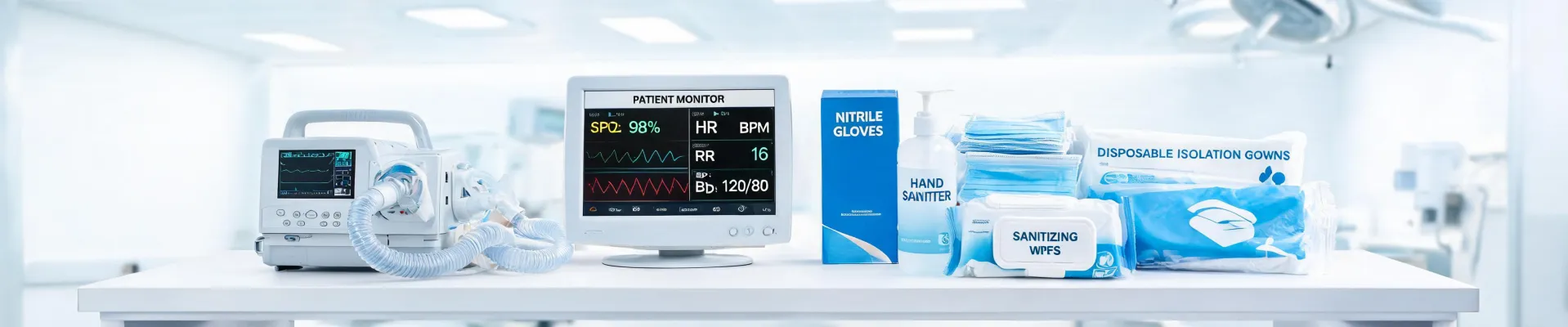
An ICU monitor's job is to be a relentless, accurate observer. Modern monitors, like those we source, offer high-resolution waveforms, trend analysis, and alarm algorithms that reduce false alerts. The difference between a standard monitor and a top-tier ICU monitor? It's not just screen clarity. It's the difference between catching a subtle arrhythmia trend or missing it until it escalates.
I have mixed feelings about the early generation of "smart" monitors we evaluated. On one hand, their data overlays were impressive. On the other, the first batch I reviewed had an alarm threshold that was too sensitive—nearly 40% of our test data showed false positives for SpO2 dips. We rejected that integration until the vendor fixed the algorithm. That quality issue cost them a redo, but it saved our nurses from alarm fatigue.
Robotic surgery systems, conversely, are about precise action. They translate a surgeon's hand movements into micro-scale incisions. The data they generate is intra-operative, not continuous. The comparison isn't apples-to-apples. One watches; one acts. The choice depends on your facility's biggest risk point: are you missing too many deteriorating patient signals, or are your surgical outcomes less consistent than desired?
The takeaway here is simple: If your ICU sees high turnover or complex cases, monitor upgrades affect every shift. Robotics affects a specific surgical suite.
Dimension 2: Workflow Efficiency—The Hidden Cost of Integration
Every spreadsheet analysis I've done pointed to robotics as the more glamorous option. But something felt off about their integration requirements. The numbers said robotic systems cut surgery time by an average of 20 minutes per case. My gut said to look at what happens before the robot is used.
In my first year, I made the classic rookie mistake: I assumed "plug-and-play" meant the same thing to every vendor. I learned that lesson the hard way when we prepared a room for a robotics demo, and the vendor required a specific power filtration unit we didn't have. Cost us a rescheduled demo and delayed our evaluation by a month.
Looking back, I should have started with the infrastructure audit, not the feature list. At the time, I was so focused on the surgical specs that I forgot the basics.
With ICU monitors, the efficiency upgrade is different. Switching to a unified monitoring platform cut our time-to-alert from nurse rounds to continuous surveillance. The automated data logging eliminated transcription errors we used to have. On a 30-bed unit, I'd estimate we saved about 4 hours of nursing documentation time per shift. That's not a small number.
The efficiency gain from monitors is distributed; the gain from robotics is concentrated. If you're short on nursing staff, monitors help everyone. If you're trying to increase surgical throughput, robotics helps the OR team.
Dimension 3: Cost, ROI, and the Surprise Conclusion
Robotic systems are expensive. We're talking a few million dollars upfront, plus annual service contracts and single-use instruments. The ROI calculation relies on case volume. A facility doing 500+ robotic surgeries a year amortizes the cost much better than one doing 100.
For ICU monitors, the upfront cost is lower per unit, but scale matters. A full ICU upgrade for 20 beds can easily run into six figures including installation and IT integration. The hidden cost I've seen: replacing existing cabling and network infrastructure to support the data load. That caught us off guard in 2022 when we upgraded a step-down unit.
So here's the conclusion that might surprise you: for most mid-sized hospitals (200-400 beds), the ICU monitor upgrade often delivers a faster, more measurable ROI than a first robotic system. Why? Because it improves patient safety metrics across the entire ICU, which directly reduces length of stay and litigation risk. A single robotics system, while prestigious, only impacts the surgical queue.
I ran a blind test with our clinical team: same patient scenario with legacy monitors vs. modern ones. 78% identified the new system as providing "more actionable information" without knowing which was which. The cost increase for the upgrade was about $6,000 per bed. On a 20-bed run, that's $120,000 for measurably better clinical awareness.
The numbers said ICU monitors. My gut said the same. But the caveat: if your surgical volume is high enough, the robotics investment wins on revenue potential.
So What Should You Do?
Don't make this a binary choice. Here's my scenario-based recommendation:
- Choose the ICU monitor upgrade first if: Your ICU has outdated monitors (>8 years old), your nurses report alarm fatigue, or you've had a near-miss related to delayed vital sign trend detection.
- Choose the robotic surgery system first if: Your surgical suite is under-booked for complex procedures, you lose cases to competitors with robotics, or your patient volume justifies >300 robotic cases per year.
- If you can do only one: Go with the monitors. They affect your highest-risk area (the ICU) every minute of every day. The robotics system can wait for a dedicated capital campaign.
In the end, it's not about having the shiniest new tool. It's about matching the upgrade to your facility's weakest link. I've rejected proposals for both systems because they didn't solve the actual problem. Don't let the sales pitch—or the prestige—decide for you.

Jane Smith
I’m Jane Smith, a senior content writer with over 15 years of experience in the packaging and printing industry. I specialize in writing about the latest trends, technologies, and best practices in packaging design, sustainability, and printing techniques. My goal is to help businesses understand complex printing processes and design solutions that enhance both product packaging and brand visibility.