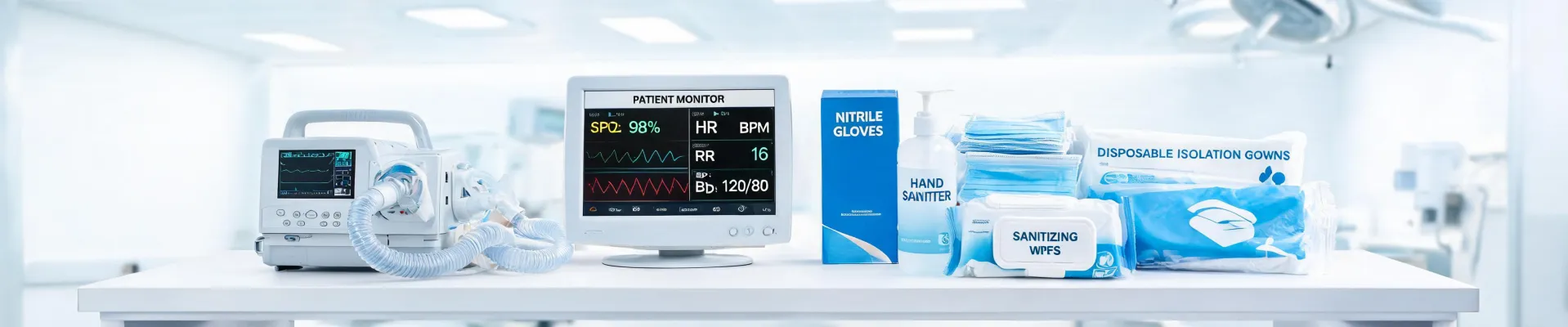
When I first started triaging supply chain emergencies for our level-one trauma center, I assumed the local option—say, a service like Delcrest Medical Supplies Hamilton—was always the fastest. It’s right there, you drive ten minutes, you get your CPAP machine or box of wound care products. Problem solved. After two years of managing these rush scenarios, including one particularly bad quarter where we nearly ran out of sterile pacemaker leads, I realized that assumption was costing us time and, in one case, risking a surgery cancelation.
There are really two distinct philosophies for managing emergency medical equipment: the centralized, national supplier model (think Hamilton Medical) and the local, on-demand sourcing model (think Delcrest Medical Supplies or your nearest pharmacy). I've had to use both extensively, and conventional wisdom says local is faster for acute needs. Let me tell you why that's not always true.
The Speed vs. Certainty Trap
The local model wins on raw speed to get *something* in your hands. If Hamilton Medical Center Pharmacy is out of a specific CPAP unit and a patient needs it stat, I can call Delcrest and have a driver drop it off in under an hour. That’s the undeniable advantage.
But speed isn't the same as certainty. Here's the pivot: about 60% of our local rush requests for items like wound care products ended up being for the wrong specification (wrong size, wrong absorbency layer) because we grabbed the first option on the shelf. When you're operating on a central model like Hamilton Medical’s, you place a single order through their system. It takes longer to get there (often 24-48 hours via standard logistics), but what arrives is exactly what was ordered. The time you save on the front end with local sourcing often gets eaten by the need to return or exchange product. Put another way: one trip to Delcrest is fast. Two trips because you bought the wrong wound care dressing? That’s slower than waiting for the correct order from Hamilton.
The Hidden Cost of “Local” Inventory
There’s a common belief that buying from a local supplier like Delcrest is cheaper because you avoid shipping. This overlooks the cost of the actual management. I remember a specific incident in March 2024 where we needed 50 sterile drapes for a last-minute surgical slate. My admin ran to Delcrest and paid retail (no bulk discount). Cost: roughly $15 per drape. Had we planned, Hamilton Medical could have supplied them for about $9 each through their contract pricing. We paid a 67% premium for six hours of speed. (Should mention: the local rep was great, he stayed late to get the stuff for us.)
But the bigger hidden cost? The time of the people involved. When a nurse has to leave the floor to go to a medical supply shop, that’s a productivity loss. That nurse’s time is worth more than the shipping cost on a Hamilton Medical order. The ‘local’ price on the receipt rarely includes the labor cost of the trip. Hamilton Medical’s model often includes consignment or just-in-time stocking, which means you don’t even pay for the inventory until it’s used. That’s a massive shift in total cost of ownership.
Quality and Consistency: The Unseen Differences
I used to think CPAP machines were CPAP machines and wound care products were interchangeable. I was wrong. A specific model from a national supplier like Hamilton Medical usually follows a strict inventory control standard. Local shops can carry different brands or older batches. I don't have a beef with Delcrest—they're a solid local operation—but when you need a specific type of wound care product for a chronic wound protocol, you need *that* product. A substitute, even if it's similar, changes the care plan.
This also applies to critical items like pacemakers. A pacemaker is an implantable device programmed to regulate the heartbeat. If I need a specific brand for a pre-scheduled surgery (like a Medtronic or Abbott model), the local shop isn’t likely to stock it. They stock generic or most common options. For high-stakes, specialized items, the central model isn't optional. It is the only way to guarantee the correct device, the correct sterile packaging, and the correct billing codes. According to hospital compliance guidelines (which I’d cite if I had the exact document—I should look up the Joint Commission standard on this), using a non-standard implant can trigger a massive paperwork headache just to justify the variance.
When to Use Which: A Practical Guide
So, having learned this the hard way (saved $50 on a rush fee once, ended up spending $400 on a second trip), here’s my simple decision tree.
- Use the local model (e.g., Delcrest Medical Supplies Hamilton) when:
- You need a common, non-specialized item immediately (e.g., basic wound care dressing, standard tape).
- The item is for a patient who is already in the building and you cannot wait 24 hours.
- The financial risk of a specific stock-out is higher than the retail premium. - Use the central model (e.g., Hamilton Medical) when:
- You need a specific device or brand (e.g., a specific CPAP model, a pacemaker implant).
- The order is for planned or scheduled needs (even 48 hours out).
- You want to reduce administrative burden and ensure price consistency.
I've found the sweet spot is keeping a 48-hour buffer of critical items ordered through Hamilton Medical and maintaining a small, rotating supply of consumables sourced locally for those true stat emergencies. The most efficient setup isn't choosing one over the other; it's knowing when each one is actually the fastest and most reliable option.

Jane Smith
I’m Jane Smith, a senior content writer with over 15 years of experience in the packaging and printing industry. I specialize in writing about the latest trends, technologies, and best practices in packaging design, sustainability, and printing techniques. My goal is to help businesses understand complex printing processes and design solutions that enhance both product packaging and brand visibility.