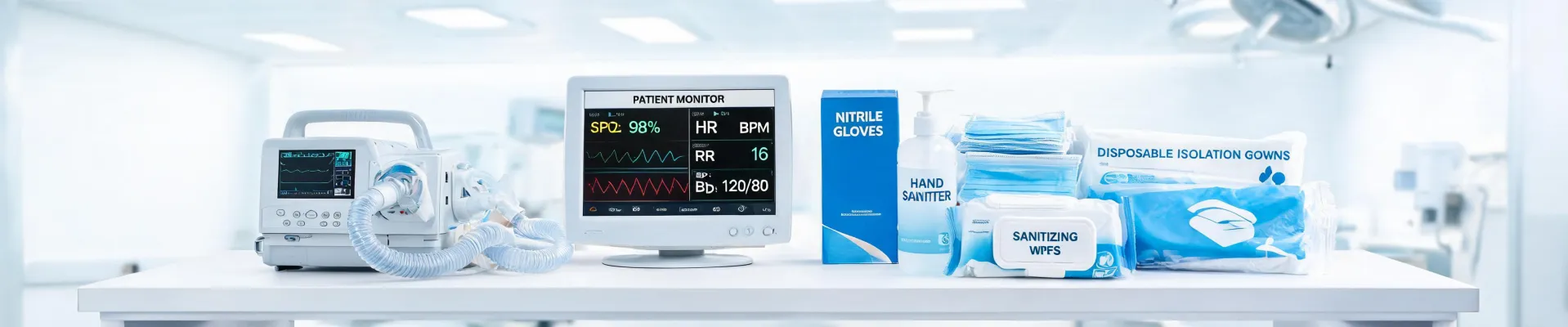
It was a Tuesday morning in late February 2020 when the trouble started. Our regular vendor for exam table paper and sanitizing wipes had jacked up their prices by almost 15% overnight. My phone was ringing off the hook with requests from the clinical staff, and the operations director was breathing down my neck to cut costs. I had seven vendors on my list, and I was feeling the pressure.
So when Mike from a new supply company called Mid-Atlantic Medical Supply — I’ll call them MAMS — said he could get us the same Kimberly-Clark wipes for $200 less per case, I bit. No, I practically swallowed the whole line. I signed a purchase order for 60 cases without checking their invoicing system. That was my mistake.
The Backstory: Why I Was Desperate to Look Good
When I took over purchasing in 2018, I inherited a mess. The previous administrator had a habit of buying premium stuff—and I mean way premium—without justifying the cost. We were spending roughly $48,000 a year on exam room supplies. The VP of Finance had given me a mandate: reduce vendor count and cut costs by 10% in my first fiscal year.
I’d already consolidated our main contract with Hamilton Medical Supplies—who were great, by the way, on the capital equipment side, like their ventilators and monitors. But for the day-to-day stuff? Their pricing on consumables like wipes and paper was becoming a sore spot. By January 2020, I’d managed to get our total spend down to around $43,000. But the VP wanted more. He wanted to see that I could find value everywhere.
Looking back, I was so focused on the number that I forgot the process.
The “Deal” That Seemed Too Good to Be True
MAMS gave me a quote that was, on paper, fantastic. The price per case of wipes was $18.50 compared to Hamilton’s $24.00. Do the math: I was saving $5.50 per case. Over 60 cases, that’s a $330 savings. I felt like a genius. I even bragged to the operations director: “See? I can find a deal when I need to.”
I placed the order on a Monday. The shipment arrived on Friday. The product was fine—same wipes, same quality. But the invoice? It was a handwritten receipt on a yellow pad. Not a PDF, not a formatted invoice. A piece of paper with scribbled numbers on it.
I remember staring at it, thinking, “Our accounting system won’t accept this.” I called Mike. He said, “That’s how we’ve always done it.”
I should have stopped right there. But I didn’t want to look bad. I’d already told my boss about the savings. So I manually entered the invoice details into our accounting portal. I fudged the vendor code. I attached a PDF I’d made myself as the invoice.
The surprise wasn't a quality problem with the wipes. It was a compliance problem with the paper trail.
The Moment It All Came Crashing Down
In July 2020, our external auditors came in for a routine review. They flagged the MAMS transactions immediately. No purchase order matching. No approved vendor in our system. No valid invoice. The auditors flagged every single one of those 60 transactions.
The finance team had to spend two weeks reconstructing the paper trail. They called MAMS repeatedly. MAMS couldn’t produce a single machine-generated invoice. Their “system” was literally a notebook.
The result? Finance rejected the entire $11,100 expense. The company had already paid MAMS. We had to eat the cost. The $330 I saved the company cost us $2,400 in rejected expenses and lost time. That’s not even counting the six hours the accounting team spent sorting it out.
I had to sit in a meeting with the VP of Finance and my boss. It wasn’t a firing offense, but it was a serious black mark. The VP said, “You saved $330 and cost us $2,400 plus 20 hours of labor. How is that a win?”
He was right.
What I Learned: The Real Price of a Low Quote
From my perspective, the cheapest option cost us way more than we saved. That $200 discount on the first order turned into a $2,400 write-off. It was a painful way to learn a lesson I thought I already knew.
Here's what you need to know if you're managing procurement, especially in a clinical setting like a doctor's office or a small hospital:
- Verify their process. Before you order anything from a new vendor, ask them for a sample invoice. If it doesn't match your accounting system's requirements, walk away. No exceptions.
- Don't let a small savings blind you to big risks. In my opinion, a vendor that can’t provide proper invoicing isn't a serious business partner. They’re a liability.
- Time is a real cost. The six hours our accounting team spent on this was time they could have spent on other projects. That’s the hidden cost nobody talks about.
If you've ever been tempted to go with a cheaper quote to make your numbers look good, I get it. But take it from someone who learned the hard way: the total cost of ownership includes the risk of a rejected expense report. And that risk can be way bigger than the discount.
Standard print resolution for our compliance documentation was 300 DPI at final size, which is the industry standard minimum for commercial offset printing. But that’s a story for another time.

Elena Varga
Elena Varga is a medical imaging systems analyst covering CT scanners, MRI systems, ultrasound platforms, digital radiography, mammography, and ophthalmic imaging equipment. She references IEC 60601-2-44 for CT safety and essential performance while examining CTDIvol, dose-length product, spatial resolution, slice thickness, field uniformity, throughput, uptime, and DICOM interoperability. Her work helps radiology leaders, medical physicists, biomedical engineers, and procurement teams compare image quality, radiation management, workflow integration, serviceability, and lifecycle cost.