-
What My Quality Audits Taught Me About Pricing
-
The Hamilton Medical T1 Case
-
Patient Monitors Have the Same Problem
-
Heart Valve Replacement Is Not Just the Valve
-
What Is a Bag Valve Mask? And Why It Matters
-
The “But Every Hospital Is Different” Objection
-
A Regulation That Points in the Right Direction
I work as a quality/compliance manager at Hamilton Medical, and after hundreds of audits, I'll say it plainly: I'd rather get an honest, higher quote than a low number with missing line items. That's not a purchasing philosophy. It's a cost-control strategy.
The most frustrating part of this job is not finding defects. It's seeing buyers base decisions on prices that aren't real. You'd think a written quote would be clear, but it depends on what's written. Some quotes list the device, some quote the system, some quote the service plan, and some quote everything except the stuff you'll actually need. I review enough purchase orders to know the difference.
The question everyone asks is “what's your best price?” The question they should ask is “what's not included in that price?” I've learned this the hard way.
What My Quality Audits Taught Me About Pricing
In Q1 2024, my team rejected 4% of first-article deliveries because the spec didn't match what the buyer paid for. Usually it wasn't the main device. It was a sensor, a cable, a software option, or a service document that was missing. The buyers thought they were getting a complete system; the vendor thought they had only quoted the base unit. Neither was dishonest. They just weren't comparing the same thing.
That's why I'm obsessed with transparent pricing. I don't want to guess which accessories are included. I want to see every line. It's the same reason I started putting “must include” lists in every contract. Since then, the number of costly surprises has dropped.
The Hamilton Medical T1 Case
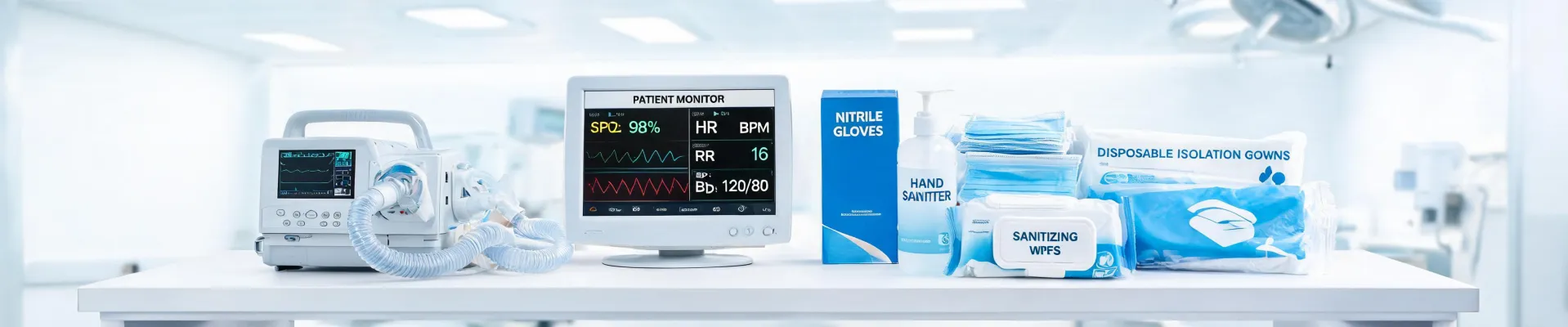
Take the Hamilton Medical T1. It's a transport ventilator that can continue ventilation during MRI or patient transport. If someone asks for a quote, the base price might only cover the breathing unit. But the real system needs an extra battery, flow sensors, a mounting solution, software options, training, and a service plan. Those aren't luxury additions; they're part of the job. If you compare only base quotes, you're not comparing ventilators. You're comparing hidden assumptions about what “ventilator” means.
A transparent vendor says: for this system, here's the complete number, and here's what it gets you. A vague vendor says: the T1 starts at a lower number, call us about the rest. I've seen the second version win the first round (unfortunately) only to lose after the final invoice. Bottom line: the higher honest quote is usually the lower total cost.
Patient Monitors Have the Same Problem
Patient monitors are another example. A monitor's quote can look remarkably low until you notice it doesn't include the mounting arm, parameter modules, cables, battery backup, software license, or integration with the hospital's EMR. Some of that is configurable, sure. But “configurable” is too often code for “we'll add it later.” If you're buying a patient monitor, ask specifically which parameters are included. Ask about cables. Ask about mounting. Ask about service. If the vendor hesitates, that's a red flag.
Heart Valve Replacement Is Not Just the Valve
Heart valve replacement is the high-stakes version. The implant itself is the visible line item, but the procedure cost includes pre-op imaging, sizing and backup valves, sterile processing, the surgical team, and post-procedure monitoring. A vendor that prices the implant transparently but hides the logistics doesn't help. The hospital still needs all of it. In my experience, the best contracts for heart valve replacement are the ones where every component is on the table before the tender is signed. That may sound difficult, but it's no different from asking for a complete system quote.
What Is a Bag Valve Mask? And Why It Matters
Sometimes the hidden costs are hiding in plain sight. Someone inevitably asks, “what is a bag valve mask?” It's the manual resuscitator in an emergency cart. It looks simple, and it's inexpensive. But its true cost includes shelf-life rotation, sterile packaging, staff training, and—once it's used—disposal. In a hospital in Cincinnati, medical waste removal Hamilton County OH vendors bill by container, by weight, or by pickup. That's a real monthly line item. No BVM quote includes it, because no BVM vendor knows your waste volume. But if you ignore it, your total cost of ownership is wrong.
The “But Every Hospital Is Different” Objection
I hear the same pushback whenever I argue for transparent pricing: “It's not that simple. Every patient is different, so every procedure and purchase is different.” I agree that every patient is different. That's exactly why pricing should be itemized. You can't compare two treatment plans if one quote includes the catheter and the other doesn't. You can't plan a budget if disposal costs are invisible. Transparency doesn't remove flexibility; it makes flexibility honest. If a cardiac team needs a different valve size, they should be able to see the price difference and make an informed decision.
A Regulation That Points in the Right Direction
This isn't just a personal preference. The U.S. Centers for Medicare & Medicaid Services has required hospitals to publish machine-readable price lists since 2021. The point is to expose exactly the kind of pricing differences I'm talking about. I'm not saying regulation solves everything, but it shows that buyers and sellers are better off when costs are visible.
So here's my position, and I'm not going to soften it: A low quote with hidden costs is not a deal; it's a guess. I'll pay more for a transparent quote because I know what I'm buying. In medical devices, the stakes are too high to leave yourself open to surprise invoices. The goal isn't to get the cheapest number. The goal is to get the number that's actually true.

Elena Varga
Elena Varga is a medical imaging systems analyst covering CT scanners, MRI systems, ultrasound platforms, digital radiography, mammography, and ophthalmic imaging equipment. She references IEC 60601-2-44 for CT safety and essential performance while examining CTDIvol, dose-length product, spatial resolution, slice thickness, field uniformity, throughput, uptime, and DICOM interoperability. Her work helps radiology leaders, medical physicists, biomedical engineers, and procurement teams compare image quality, radiation management, workflow integration, serviceability, and lifecycle cost.