-
So, What Is a Hospital Bed?
-
The Surface Problem: We Tried to Buy a Thing, Not a Process
-
The Deeper Problem: We Were Using Yesterday's Mental Model
-
The Same Mistake, Repeated: A Surgical Light and a Vital Signs Monitor
-
The Cost of Getting It Wrong
-
What Actually Works Now
-
So What Is a Hospital Bed, Really?
So, What Is a Hospital Bed?
The question sounds simple. What is a hospital bed?
It's a bed in a hospital, right? That's what I thought in 2017. I was handling capital equipment orders for hospitals, and I'd already specified what felt like a dozen beds. Then Hamilton Medical Center emergency room leadership asked me to help replace 12 beds. I opened the product catalog, compared a few spec sheets, and placed the order.
I was wrong. Expensively wrong.
The retrofit cost $12,400. The delay stretched to 11 days. And the nurses who had to use the beds diagnosed the problem in about ten minutes. This is the story of how that happened, why it's still happening with surgical lights and vital signs monitors, and what I finally changed.
The Surface Problem: We Tried to Buy a Thing, Not a Process
What is a hospital bed? The way you answer that question determines how much money you waste.
In my first year (2017), I made the classic mistake. Hamilton Medical Center's emergency room was replacing 12 beds, and I treated the decision like choosing office furniture. Width, length, weight capacity, color of the frame. I checked all the boxes.
What I didn't check: how the beds would work with the existing nurse call system, whether the bed-exit alarms were configurable, how staff would move a patient who needed CPR, or how the bed would feel to a patient with a suspected spinal injury.
The beds looked fine in the demo. They looked even better in the brochure. The day they arrived, the ED charge nurse glanced at one and asked, Where's the CPR release?
I didn't know that was a thing. I still kick myself for not asking the ED charge nurse what happened when a bed alarm went off. If I'd done that, I might have avoided half the retrofit.
Everything I'd read about hospital beds said to prioritize safety features and pressure redistribution. In practice, for our ED, the missing feature was workflow fit. The beds had safety features, but they didn't fit the way the team actually worked.
The conventional wisdom is that a hospital bed is a medical device with rails, wheels, and a control panel. My experience with 200+ equipment orders suggests that's like calling a car a thing with an engine. Technically true, useless as guidance.
The Deeper Problem: We Were Using Yesterday's Mental Model
Here's the thing: the industry has changed. What was best practice in 2020 may not apply in 2025.
A modern hospital bed isn't just a place for a patient to lie down. It's a platform. It connects to the vital signs monitor, the nurse call system, the bed-exit alarm, sometimes the EHR. It's part of a chain of decisions about how care is delivered.
When I asked what is a hospital bed in 2017, I was still thinking like a spec reader. I compared dimensions and price. I didn't compare workflows. I didn't ask who would clean the bed, who would maintain it, or what would happen during a code.
The fundamentals haven't changed: patients need to be safe, comfortable, and accessible to caregivers. But the execution has transformed. That's why a hospital bed purchase now includes integration testing, not just a purchase order.
For hospital beds, IEC 60601-2-52 spells out safety and performance requirements. AAMI's recommended practices on equipment management push the same idea: selection should start with use case, not brochure specs. I didn't know either of those standards in 2017. The standards didn't save me from my own ignorance.
The Same Mistake, Repeated: A Surgical Light and a Vital Signs Monitor
You'd think I learned the lesson. I didn't. Not fully.
In September 2022, we needed to replace a surgical light in one of the procedure rooms. I did the same thing: held up a spec sheet, liked the lux numbers, ignored the context.
Here's a sentence I never expected to say: a surgical light isn't a flashlight. It's not about raw brightness. It's about color rendering, shadow control, heat output, and how comfortable it is for a surgeon standing under it for two hours. The light we chose was bright. It also washed out tissue color. Nurses complained, and the provider team voted to replace it within six months.
That mistake cost $3,800 in labor and replacement, plus a credibility hit that I'm still earning back.
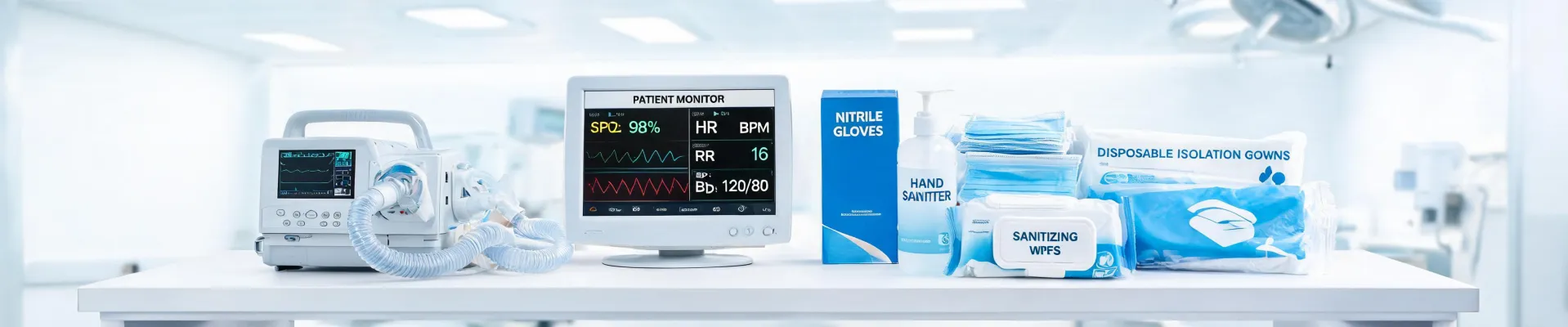
The same thing happened with a vital signs monitor in Q1 2024. We ordered 24 units for a telemetry floor. Each vital signs monitor looked great on paper: wireless capability, clear display, long battery life. We didn't check whether the floor's Wi-Fi infrastructure could handle 24 concurrent devices. The monitors kept dropping off the network. We spent $8,100 on bridging hardware and two weeks of IT time.
I only believe in doing a site visit before every equipment order because I ignored that step and paid for it. Twice.
The Cost of Getting It Wrong
Let's add it up: $12,400 for the beds, $3,800 for the surgical light, $8,100 for the vital signs monitor hardware. Over $24,000 in avoidable costs, not counting the time, the frustration, or the patients who got a worse experience while we fixed our mistakes.
I had to explain all this to the finance team. That's the part that still stings. The Hamilton Medical Center financial assistance program is part of how the hospital supports the community. Every dollar we waste on a bad purchase is a dollar that doesn't go where it should. The financial assistance coordinator didn't yell at me. She didn't have to. She just highlighted the budget variance and asked, Can you account for this?
I could. That made it worse.
This is the part no spec sheet shows: bad equipment decisions bleed into the rest of the hospital. They steal money from patient care, steal time from nurses, and steal trust from the people who have to live with your decisions.
What Actually Works Now
I'm not going to write a 10-step manifesto. If you're shopping for a hospital bed, a surgical light, or a vital signs monitor, here's the short version:
- Start with the workflow. Spend an hour on the unit. Watch what nurses actually do. Ask what annoys them.
- Map the integrations before you choose the hardware. Nurse call, EHR, Wi-Fi, central station, call lights.
- Test with your actual staff and your actual patient population. A 15-minute demo in a conference room doesn't count.
- Cost the whole lifecycle: installation, training, maintenance, repairs, replacement parts.
- Check the standards and evidence. IEC 60601-2-52 for beds, IEC 60601-2-41 for surgical lights, and whatever interoperability standards your hospital has committed to for monitoring.
As of January 2025, I'm still using this checklist for every capital equipment order.
So glad we did a 48-hour pilot on the next monitor order. We almost approved 24 units without checking network load—same mistake.
The first time we did this properly, we caught three integration issues before signing a purchase order. The trial alone saved us roughly $17,000.
We've caught 47 potential errors using this checklist in the past 18 months. Some were small. A few would have been the kind of mistake I made in 2017.
Look, I respect Hamilton Medical's technology. I've also seen their team ask about workflow instead of pushing the newest feature set. The answer isn't a brand. It's a fit.
So What Is a Hospital Bed, Really?
The short answer: a medical device that helps a patient rest and recover while giving caregivers a safe way to deliver care.
The longer answer: a platform that only works when it matches the ED workflow, the IT infrastructure, the training habits, and the maintenance capacity. A surgical light is the same. A vital signs monitor is the same.
I don't start with what should we buy anymore. I start with what is this equipment supposed to do here. The answers are always different. That's the whole point.

Elena Varga
Elena Varga is a medical imaging systems analyst covering CT scanners, MRI systems, ultrasound platforms, digital radiography, mammography, and ophthalmic imaging equipment. She references IEC 60601-2-44 for CT safety and essential performance while examining CTDIvol, dose-length product, spatial resolution, slice thickness, field uniformity, throughput, uptime, and DICOM interoperability. Her work helps radiology leaders, medical physicists, biomedical engineers, and procurement teams compare image quality, radiation management, workflow integration, serviceability, and lifecycle cost.