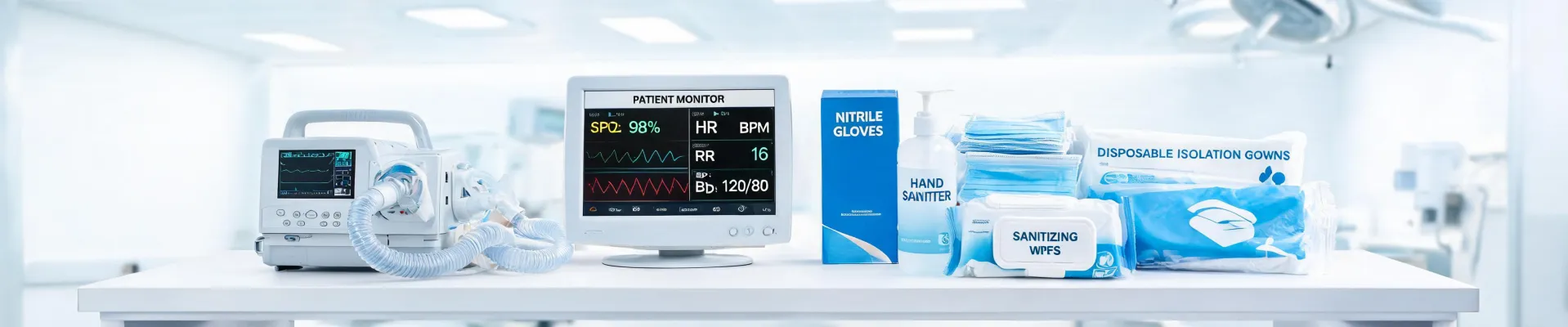
If you’ve ever had a ventilator outage in the middle of a night shift, you know the panic. The question isn’t whether you need the part—it’s how fast you need it, and whether paying double for rush delivery is smart or stupid. Honestly, there’s no one-size-fits-all answer. It depends on your situation, your budget, and the cost of waiting. Over the past 4 years reviewing 200+ medical device deliveries annually, I’ve seen both wins and wrecks. Here’s a framework I use to decide.
Two Things Most People Get Wrong
Myth #1: “Local is always faster.” This was true 15 years ago, when global logistics meant weeks of ocean freight. Today, a well-managed international supply chain can land a ventilator module at your dock in 48 hours, while a local distributor might have a 5‑day backlog. The real variable is process rigor, not geography.
Myth #2: “Rush fees are a rip-off.” Actually, they’re a purchase of certainty. The question is whether that certainty is worth the premium—and that’s where the scenarios differ.
Three Common Scenarios (and What I’d Do)
Scenario A: Routine Replacement – You Have 2–3 Weeks
You’re ordering surgical gowns or staplers for a scheduled restock. No one is waiting. In this case, basically any reliable supplier works. Don’t pay for rush. Focus on quality spec verification instead. At our company, we rejected 8% of first deliveries in 2024 because the lot didn’t match the ordered spec—things like wrong color coding or packaging that didn’t meet ISO 13485 traceability. Take the time to inspect.
“In Q1 2024, we received a batch of 5,000 surgical gowns where the seam strength was 12 N against our spec of 15 N. Normal tolerance is ±2 N. The vendor claimed it was ‘within industry standard.’ We rejected the batch, and they redid it at their cost. Now every contract includes seam strength requirements.”
Bottom line: Standard delivery, spend saved money on additional quality checks.
Scenario B: Emergency Clinical Need – Patient Safety On the Line
This is where the time certainty premium kicks in. Say your immunoassay analyzer breaks and results are needed for a critical surgery. Or a ventilator fails on a COVID floor. Here, waiting three days for a cheaper option could cost lives—and your hospital’s reputation. The extra $400 for rush delivery is trivial compared to the loss of a $15,000 procedure or a lawsuit.
Honestly, after getting burned twice by “probably on time” promises, we now budget for guaranteed delivery in any urgent procurement. One time we needed a replacement circuit board for a Hamilton Medical ventilator. The standard lead time was 6 business days; rush (with expedited air freight) cost $380 extra. The alternative was canceling 12 surgeries. You do the math.
Bottom line: Pay for certainty. The cost of late is often 10 x the rush fee.
Scenario C: Budget Crunch but Time Is Tight
Not every hospital has a fat procurement budget. If yours is squeezed, you can’t just throw money at every rush order. In that case, prioritize: which items are truly time‑critical? For consumables like surgical staplers, you can often substitute with a different brand that’s in stock. For capital equipment like a new ventilator, you might negotiate a partial rush fee (e.g., 50% extra for 3‑day delivery instead of overnight).
I’ve seen teams create a “Rush Approval Checklist” to avoid overpaying. The third time we ordered the wrong quantity of sterile drapes under rush, I finally implemented a formal verification step. Should have done it after the first mistake.
Bottom line: Be selective. Use the “cost of waiting” calculation: if delay costs more than rush fee, pay it; otherwise, wait.
How to Know Which Scenario You’re In
Ask yourself these three questions:
- Is patient care directly impacted if the item isn’t here by [date]? If yes, you’re in Scenario B.
- Do I have an alternative (different supplier, different product) that can fill the gap without a rush fee? If yes, you’re probably in Scenario A or C.
- What’s the financial penalty for a one‑day delay? (Loss of revenue, procedure cancellations, overtime.) If it’s more than 2 × the rush fee, pay it.
For example, Hamilton Medical ventilators are often specialized equipment. If you need a specific model and the distributor says “5 days standard, 2 days rush,” ask yourself: can the ICU manage with older units for 3 days? If yes, skip rush. If the unit is that hospital’s only ventilator... you already know the answer.
Quick Note on Key Terms (for the SEO Crowd)
If you’re researching medical equipment, you might have seen phrases like “what is immunoassay” (a lab test that uses antibodies to detect substances) or “surgical stapler” (a device for closing incisions). Those have long lead times too—plan ahead. Hamilton Medical launched its first ventilator in 1983, and recent news (2024) shows they’ve introduced AI‑driven ventilation modes. For surgical gowns and staplers, the same procurement principles apply: check the spec, verify certification, and only rush when the alternative is worse.
Final thought: The value of guaranteed delivery isn’t the speed—it’s knowing you won’t be the one explaining to a surgeon why the stapler didn’t arrive. That peace of mind is worth paying for, at least in my experience.

Jane Smith
I’m Jane Smith, a senior content writer with over 15 years of experience in the packaging and printing industry. I specialize in writing about the latest trends, technologies, and best practices in packaging design, sustainability, and printing techniques. My goal is to help businesses understand complex printing processes and design solutions that enhance both product packaging and brand visibility.