-
What Is Hamilton Medical?
-
What Products Does Hamilton Medical Actually Make?
-
What Is SpO2, and Why Does It Matter on a Ventilator?
-
Are Hamilton Medical and Hamilton Medical Center the Same?
-
Does Hamilton Medical Make Dental Laboratory Equipment or Mobility Scooters?
-
What Should a Buyer Verify Before Purchasing Hamilton Medical Equipment?
-
Are Hamilton Medical Ventilators Worth the Premium?
I've been buying medical equipment for a hospital network for about six years, and Hamilton Medical is one of the vendors I handle most often. Every few weeks, I get the same questions from colleagues, administrators, and even vendor reps: What exactly is Hamilton Medical? What is SpO2 on their ventilators? And is the Swiss company the same as Hamilton Medical Center? So here's my practical, no-spin FAQ based on actual procurement experience, not marketing material.
What Is Hamilton Medical?
Hamilton Medical AG is a Swiss medical device company headquartered in Bonaduz, Switzerland. It was founded in 1983 and has spent more than four decades focused exclusively on mechanical ventilation. They don't make diagnostic imaging machines, surgical instruments, or hospital furniture. The product line is respiratory: ventilators for adult and pediatric use, plus the circuits, filters, humidification products, and ventilation management software that support them.
As a buyer, I actually find that focus reassuring. When I'm purchasing Hamilton Medical products, I'm dealing with a company whose entire research and engineering budget goes into ventilation and its clinical data ecosystem. That's how you get good at a specialized piece of equipment—by not trying to be everything to every hospital.
What Products Does Hamilton Medical Actually Make?
Their lineup covers just about every ventilation scenario a hospital runs into:
- ICU ventilators — the HAMILTON-C1, C3, and C6 series
- Advanced ICU ventilation — the HAMILTON-G5, which supports integrated SpO2 monitoring and capnography
- MRI-compatible ventilation — the HAMILTON-MR1 for patients who need ventilation during MRI scans
- Transport ventilation — the HAMILTON-T1 for intra-hospital patient transfers
- Consumables and accessories — breathing circuits, filters, HMEs, and mounting hardware
When people ask, "What's actually installed in ICU rooms?" the C-series and G5 are the models I see most often in US hospitals. And in our own facility, those are the ones our respiratory therapists specifically requested during the last replacement cycle.
What Is SpO2, and Why Does It Matter on a Ventilator?
SpO2 stands for peripheral oxyhemoglobin saturation—an estimate of how much oxygen your red blood cells are carrying compared to their full capacity. It's measured with pulse oximetry, which shines light through a fingertip or earlobe to read how much of the light is absorbed by oxygenated hemoglobin. The result is a percentage.
For healthy adults at sea level, normal SpO2 is generally between 95% and 100%. In clinical practice, an SpO2 below 90% is treated as hypoxemia—a sign that oxygen delivery needs prompt attention. On a ventilator, SpO2 gives the clinical team a continuous check on whether the settings are working. Dropping SpO2 often means adjusting FiO2 (the oxygen concentration) or PEEP (the pressure keeping the lungs open).
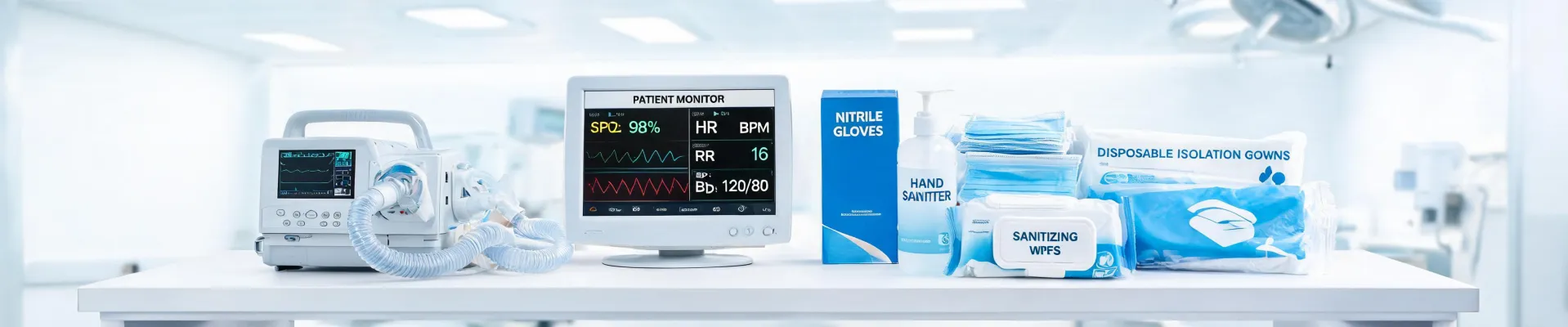
Here's the part that matters to me as the person signing the purchase order: integration. Hamilton Medical ventilators can display SpO2 data directly on the same screen as the ventilation waveform and pressure settings. Our respiratory therapists don't have to split their attention between a separate monitor and the ventilator. As of January 2025, this is one of the first things physicians notice when we do live equipment demos.
Are Hamilton Medical and Hamilton Medical Center the Same?
No. And this is the biggest mix-up I see in procurement.
Hamilton Medical Center is a hospital in Dalton, Georgia. Searching for "Hamilton Medical Center physicians" takes you to that hospital's physician directory. Hamilton Medical AG is the Swiss ventilator manufacturer. The name overlap is coincidence—they are completely unrelated organizations.
This matters more than you might think. When I first started researching vendors, I honestly lost an afternoon reading the wrong Hamilton entity's financial reports before I realized the mistake. If you're doing vendor due diligence, check the legal entity name, the website domain, and the FDA registration. The 510(k) clearances and service agreements belong to the Swiss manufacturer, not the Georgia hospital.
Does Hamilton Medical Make Dental Laboratory Equipment or Mobility Scooters?
No. I've seen internal purchase requests from staff who searched "Hamilton dental laboratory equipment" or "Hamilton mobility scooter" and, because the name matched, assumed it was the same company. It's not.
Hamilton Medical AG manufactures mechanical ventilators and related respiratory care products. Other "Hamilton" brands exist in dental lab supplies, laboratory instruments, mobility aids, and logistics—because Hamilton is a common surname and a fairly common brand name across industries.
For hospital purchasing, this confusion has real consequences. Dental laboratory equipment and mobility scooters have their own regulatory classifications and safety standards. If you need those products, you should be buying from manufacturers with appropriate clearances for those categories, not from a ventilator company that doesn't make them. Know your market category before you search.
What Should a Buyer Verify Before Purchasing Hamilton Medical Equipment?
I've made procurement mistakes over the years, so here's my checklist:
First, check the FDA clearance specifics. Hamilton Medical ventilators are cleared for use in healthcare facilities, but you should still verify the specific model's 510(k) documentation in the FDA database. Confirming regulatory status is your job, not just the vendor's.
Second, get service response commitments in writing. I went back and forth between two ventilator vendors for almost a month during our last ICU replacement. The alternative had a lower upfront price, but their service partner couldn't commit to our region's response time. Hamilton Medical's local partner gave us a four-hour response window in writing. That single detail made the decision for us.
Third, involve the clinical team before purchase. The old mindset that "doctors will use whatever you put in front of them" was true twenty years ago, when device options were fewer and training was simpler. Today, physicians and respiratory therapists have strong preferences. If they won't use a device, it doesn't matter how good the brochures look. I've learned to get their hands-on feedback before I sign anything.
Are Hamilton Medical Ventilators Worth the Premium?
I have mixed feelings here, so let me be direct. On one hand, Hamilton Medical's list prices are not the lowest in any competitive bid I've run. You can absolutely find cheaper ventilators from other manufacturers, and some of those cheaper machines do a solid job.
On the other hand, the quality difference shows up quickly in operation. Integrated SpO2 and ventilation data save our staff real time during assessments. Our intensivists have told me they feel more confident interpreting patient status on the Hamilton Medical interface. The therapists appreciate the consistency. And those small experiences shape how the ICU presents itself to visiting specialists and to patients' families. I know this sounds soft, but quality is basically a brand statement. Clinicians and families notice the difference even if they can't name the equipment.
So yes, we paid a premium. But I do not mean that we paid it blindly—we validated it against real operational data. When I ran a total cost of ownership comparison, including consumables, service contracts, training time, and projected lifespan, the gap between Hamilton Medical and the cheaper alternative shrank to roughly 8% over five years. For that 8%, we got better integration, stronger team confidence, and a manufacturer that actually responded when we needed support. Bottom line: don't buy on the initial quote. Buy on the quality of the whole package.

Jane Smith
I’m Jane Smith, a senior content writer with over 15 years of experience in the packaging and printing industry. I specialize in writing about the latest trends, technologies, and best practices in packaging design, sustainability, and printing techniques. My goal is to help businesses understand complex printing processes and design solutions that enhance both product packaging and brand visibility.